How to get feedback on your logo design: who to ask, the exact questions that get useful answers, where to post, and how to collect it all in one place.
Table of contents
TL;DR: To get feedback on a logo design you can use, show it with context, ask three specific questions instead of "what do you think?", and ask the right people: target customers for meaning, designer peers for craft, and never only friends. Then collect the answers in one place so you can act on them.
The five steps:
- Write five lines of context.
- Pick three questions from the checklist below.
- Ask the group that's good at the thing you're unsure about.
- Send one link, not five files.
- Weigh the answers with one rule.
You post the logo. Within an hour you have "looks great!", "I'd make it bigger", "have you tried blue?", and one person asking what the company does. Five replies, nothing you can act on.
That's the usual result when someone asks "how can I get feedback on my logo design?" and then asks everyone they know, with no context, what they think. The fix is not more people. It's a better question, the right people, and one place for the answers.
This guide gives you the question list, a who-to-ask table, and a way to stop the replies scattering across texts, DMs and a Reddit thread.
What useful logo feedback looks like
Useful feedback tells you whether the logo does its job for the people it's for, and points at something specific you can change. Everything else is a mood.
Useful feedback is a reaction tied to a goal and a spot. "I can't read the second word at phone size" is useful. "I don't love it" is a mood.
Answers come in three kinds, from most to least useful:
- What they understood. "I thought it was a dental clinic." That's meaning, and it's the one that matters most.
- What they couldn't do. "I can't tell the letters apart at small sizes." That's legibility, and it's fixable.
- What they prefer. "I'd go blue." That's taste.
Reality Check: most logo feedback is taste. Taste is fine from your client, who has to live with the thing. From a stranger it's noise.
Why "what do you think?" never works
It asks for a verdict with no goal, so people give you their taste or their politeness. Neither helps you change anything.
Be honest about what the question usually means. "What do you think?" often means "please tell me it's good." Friends hear that and say it's good. Strangers hear it and tell you about their favorite color.
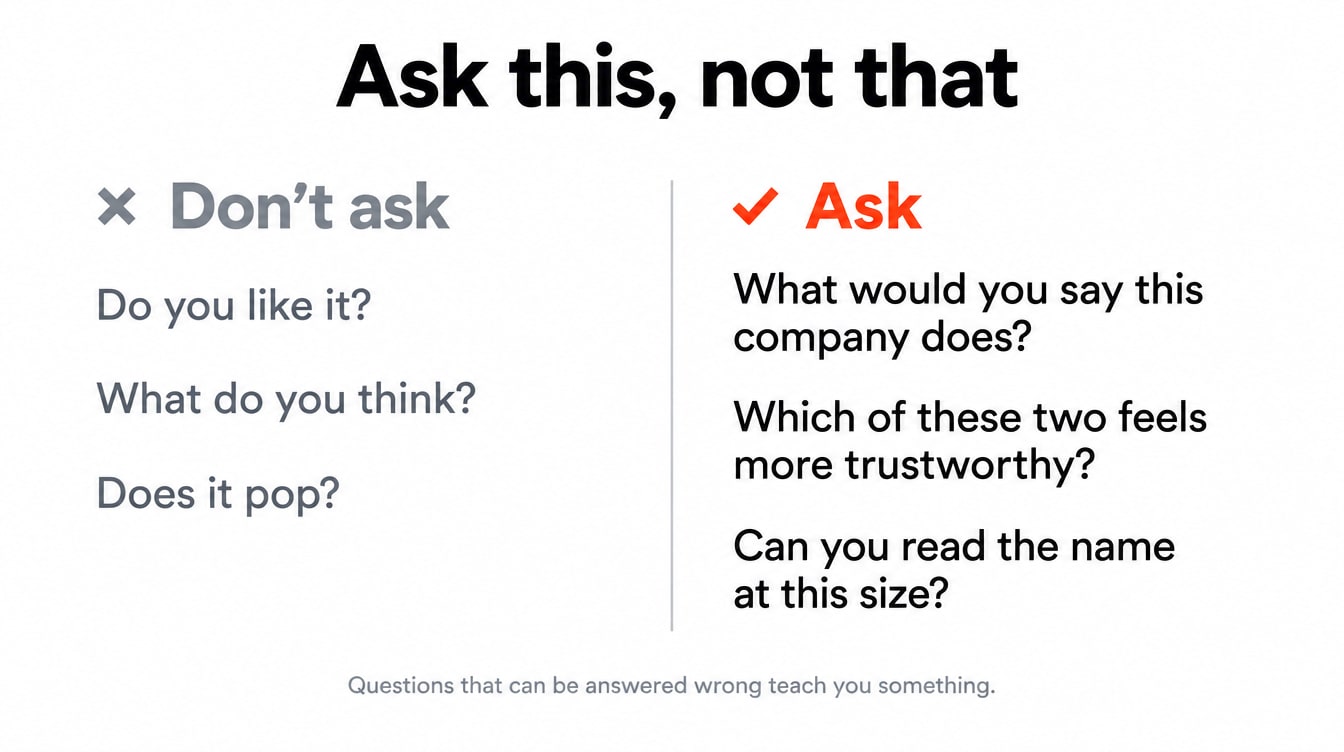
Replace the verdict with a task. "What does this company do?" has a right answer. "Which of these two feels more trustworthy?" forces a choice. "Can you read it at this size?" is yes or no.
A Graphic Design Stack Exchange user put the template in one line: "Which variation communicates _______ more effectively?" (oldboy, on where to get logo feedback). Fill in the blank with your goal and you have a question worth asking.
Key Insight: a question that can be answered wrong is a question that can teach you something. "Do you like it?" can't be answered wrong.
Give context before you ask
Five lines above the logo turn random opinions into feedback on the actual problem. Nobody can tell you whether a logo works without knowing what it's supposed to do.
Paste this above the image every time:
- Brand: what it is, in one line. "A mobile dog groomer in Austin."
- Audience: who it's for. "Busy owners of large dogs, 30 to 55."
- Goal: the one thing the logo must say. Trustworthy, playful, premium, local. Pick one.
- Where it lives: app icon, van door, embroidered polo, 16 px favicon.
- What I'm unsure about: one thing. "Whether the paw reads as a paw at small sizes."
The r/logodesign community has a whole thread on this, titled "Critique my logo" without context, or how to ask strangers for help. The short version: no context, no useful critique.
Watch Out: don't post client work publicly before launch, and never post anything under an NDA. Send a private link to named people instead. The feedback is better anyway.
The questions that get useful answers
Pick three from the list for the people you're asking. Never ask more than five; after that you're running a survey, and people stop reading.
For target customers (people who would buy):
- What do you think this company does?
- Which of these two feels more [your goal word] to you?
- What's the first word that comes to mind?
- Would you trust this with your money? (Or your dog, your kids, your car. Use the real one.)
For designer peers:
- Does it hold up at 16 px and in one color?
- Is there a spacing, kerning or weight issue you'd fix first?
- Does it look like a mark you already know? Name it.
- What's the weakest element, and why?
For a client:
- Which of these three directions is closest to how you want customers to feel?
- Is anything here wrong for your industry?
- If you could change one thing, what would it be?
Never ask: Do you like it? Does it pop? Is it modern enough? Which one is prettier?
Pro Tip: show two options, not five. Two forces a reason. Five gets a shrug and "the second one, I guess."
Who to ask, and what each is good for
Different people are good at different questions. Ask customers about meaning, designers about craft, and friends only whether they can read it.
| Who | Good for | Bad for | Cost | Where |
|---|---|---|---|---|
| Friends and family | Can they read it; first word that comes to mind | Taste; they will be nice to you | Free, fast | A text with one question |
| Target customers (5 to 10) | Meaning and trust; which option fits | Craft details | An afternoon of asking | Your customer list, a local group, people who already buy from you |
| Designer communities | Craft: kerning, balance, scalability, lookalikes | Whether it fits your market | Free; needs thick skin | r/logodesign, r/design_critiques, r/Logo_Critique, Graphic Design Stack Exchange |
| A paid critique or mentor | All of the above, with reasons | Nothing, if they're good | Money | A designer whose work you admire |
| AI logo checkers | A legibility and contrast sanity check | Meaning, taste, fit | Free | Brandmark's Logo Rank and similar |
Target customers are the group most people skip, and the most useful one. You don't need a focus group. Text five people who match your audience, one question each: "What do you think this company does?" If three of them get it wrong, you have your answer.
Designer communities are good at craft and bad at context. Post the five-line template first, two options at most, three questions, and say what stage you're at (sketch, refined, final). Expect bluntness. Expect at least one reply that ignores your questions entirely.
One Stack Exchange answer makes the counterpoint worth hearing: "asking the Internet what they think of your logo is like asking YouTube what they think of your video. Maybe someone knows what they're talking about, but odds are not and you'll just get a distraction." (Cakey, same thread). That's true when you post without questions. It's much less true when you ask three specific ones.
Quick Win: ask five customers one question each by text today. You'll learn more by dinner than from a week-long thread.
Collect it in one place
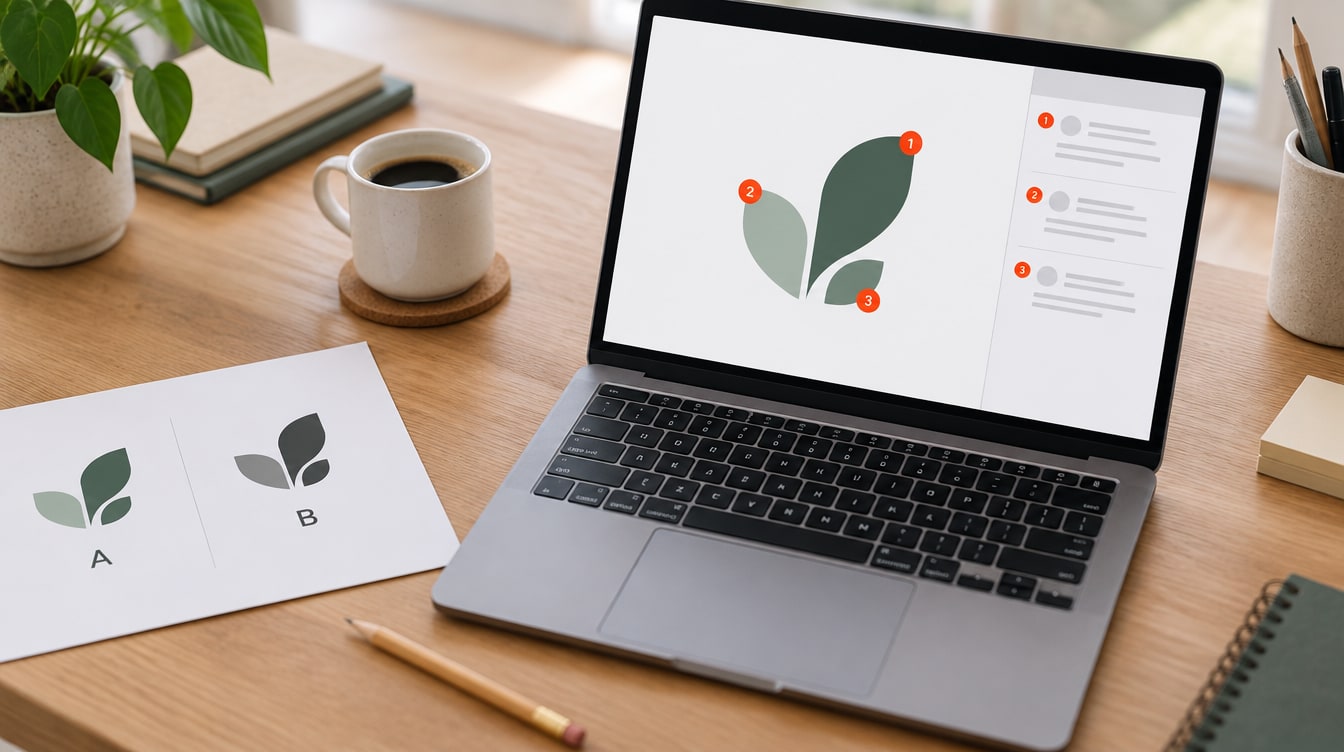
Feedback that lands in five places gets lost. Send one link where people comment on the exact spot, and every note sits together where you can see the pattern.
Here's how it usually goes. A Reddit reply says the "g" is heavy. A DM says the whole wordmark is heavy. Your cousin texts "love it." The client emails "let's hop on a call," about a version you sent on Tuesday, not the one from Thursday. By Friday you're not sure who said what about which file.
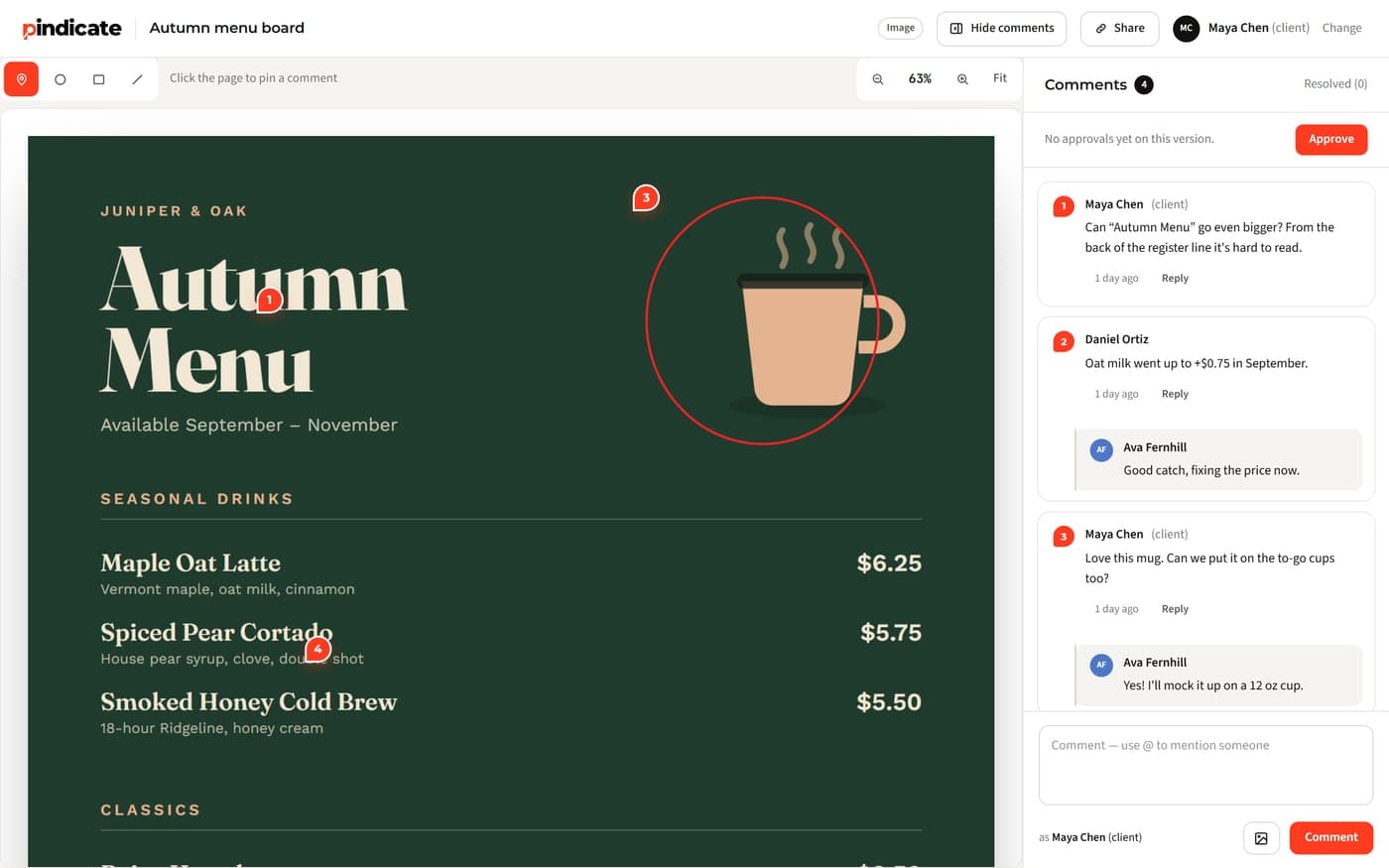
The fix is one link and one version. Pindicate is our tool, and this is the job it was built for: upload the logo, get a link, send it. People open it, type a name and pin a comment to the part of the logo they mean. No account, no download. You can open a sample review to see what they'd see, or read how Pindicate works in two minutes.
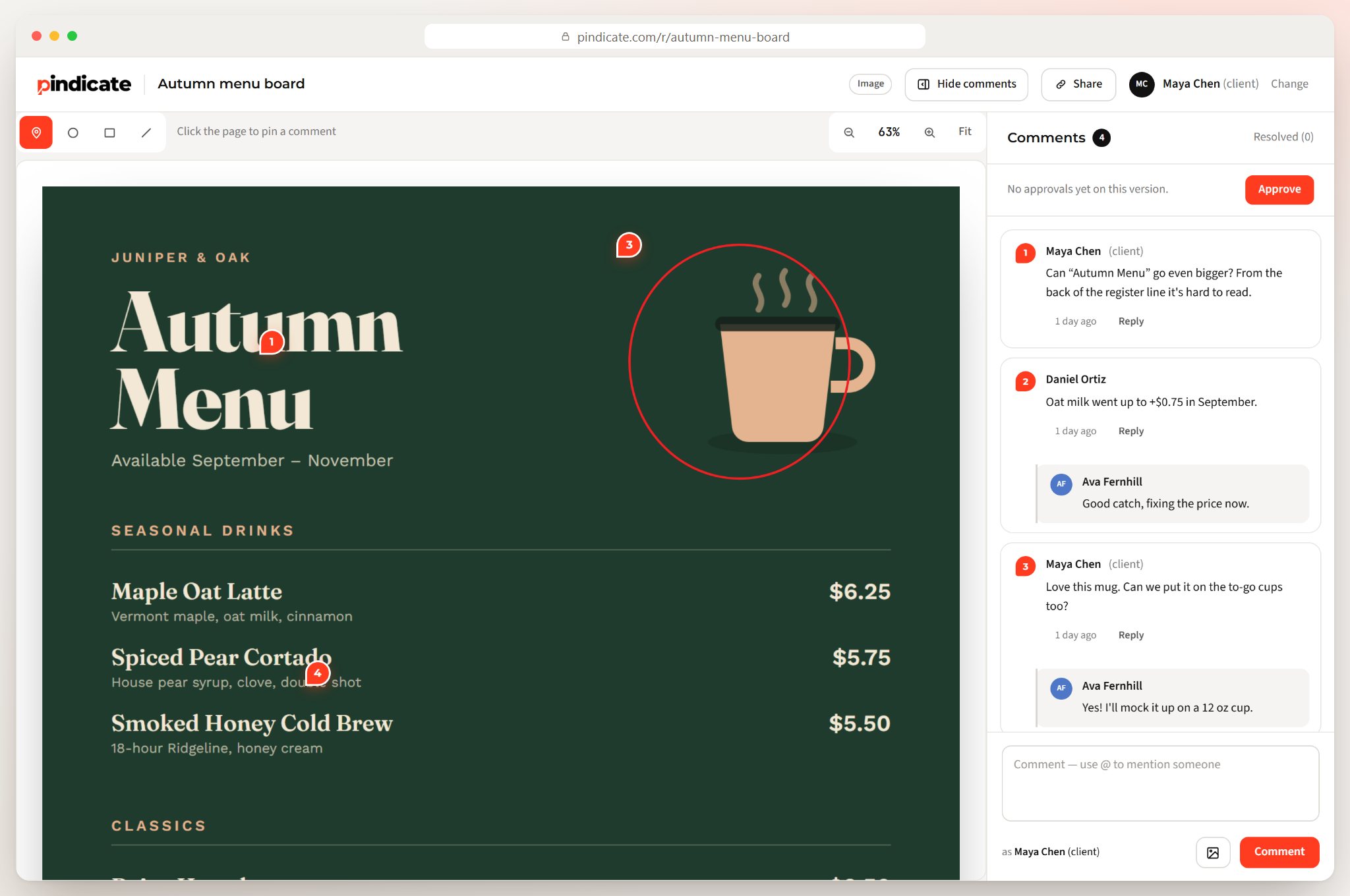
If you already use a proofing tool, use that; the best proofing software for designers all do this. The point is one place, not one brand.
Upload your logo on the homepage and you'll have a review link in about ten seconds. Free, no signup. Send your logo as a review link.
How to weigh what comes back
Count patterns, not voices. One person's taste is a data point. Three people failing the same task is a finding.
The rule, in three lines:
- Anything about meaning or legibility that two or more people say: fix it.
- Anything about taste from one person: write it down and move on.
- Anything from your client about their industry: take it seriously, even if you disagree.
Picture the first line in practice. A plumber's logo, a wrench inside a drop. Three of five customers ask if it's a dental clinic. That's not three wrong people; that's a drop that reads as a tooth. Square off the bottom of the drop and the question goes away.
If you do this for clients, the same rule runs every revision round. Pindicate for freelancers covers how to keep those rounds short.
Frequently Asked Questions
Where can I get feedback on my logo design?
Three places, for three jobs. Your target customers tell you whether it says the right thing. Designer communities like r/logodesign, r/design_critiques and Graphic Design Stack Exchange tell you about craft. A paid critique gives you both, with reasons. Friends can tell you whether they can read it, and not much more.
What questions should I ask about my logo?
Ask tasks, not verdicts. "What does this company do?", "Which of these two feels more trustworthy?", and "Can you read the name at this size?" all have answers you can act on. Skip "Do you like it?" and "Does it pop?"; they can't be answered in a way that helps you.
Is it a good idea to post my logo on Reddit for feedback?
Yes, for craft feedback, if you post context first: what the brand is, who it's for, what the logo must say, and what you're unsure about. Post two options at most and ask three questions. Don't post client work before launch, and never post anything covered by an NDA.
Can an AI tool review my logo?
Tools like Brandmark's Logo Rank score legibility, uniqueness and contrast. That's a useful sanity check for small sizes and color combinations. They can't tell you whether the logo means the right thing to your customers, and that's the question that matters most.
How many people should I ask for logo feedback?
Five to ten people from your target audience, one to three designers, and your client if there is one. More than that and you're collecting opinions, not feedback. Patterns usually show up by the fifth answer, and new answers after the tenth mostly repeat the first ten.
How do I ask a client for logo feedback without getting "make it pop"?
Give them a choice, not a blank canvas. Show two or three directions with a one-line reason for each, and ask which is closest to how they want customers to feel. Then ask for the one change they'd make. Open-ended asks invite "pop"; a choice invites a reason.
Send it as a link, not an attachment
Context, three questions, the right people, one link. That's the whole method. Upload your logo, get a review link, and send it to the five people whose answers matter. It's free, and nobody has to sign up to comment.
Send your logo as a review link, or read more guides on getting feedback that's worth the ask.